A Comprehensive Guide to STD Testing at Phuket Medical Clinic

Visiting an idyllic location like Phuket, Thailand, can be the trip of a lifetime. However, staying healthy and safe during your travels is paramount, especially when it comes to your sexual health. Fortunately, Phuket Medical Clinic stands as a beacon of reliable, professional, and confidential healthcare, offering comprehensive STD testing services.

The Importance of STD Testing

Understanding STDs

Sexually transmitted diseases (STDs) are infections passed from person to person during sexual contact. They are a critical public health issue that affects both men and women, with symptoms ranging from mild to severe.

The Importance of STD Testing

Getting tested for STDs is crucial in maintaining optimal health and stopping the spread of these diseases. Many STDs are asymptomatic, which means they do not show symptoms, especially in the early stages. Therefore, it’s essential to get tested regularly if you are sexually active.

Why Choose Phuket Medical Clinic?

Situated in the heart of Thailand’s paradise island, Phuket Medical Clinic is renowned for its commitment to patient care and confidentiality. It is equipped with state-of-the-art medical facilities and has a team of highly skilled and experienced medical professionals who adhere to international standards of healthcare.

Why Choose Phuket Medical Clinic
  • Comprehensive STD Testing Services
    • Phuket Medical Clinic offers a wide range of STD testing services, including but not limited to testing for Chlamydia, Gonorrhea, Syphilis, HIV/AIDS, Hepatitis B and C, Herpes, and HPV. The clinic uses advanced testing procedures to ensure accurate results and timely diagnoses.
  • Confidential and Non-Judgmental
    • The clinic guarantees total patient confidentiality, operating on a non-judgmental basis. Your privacy and comfort are their primary concerns. You can rest assured that your personal information and test results will be kept private and secure.
  • Fast and Accurate Results
    • Thanks to their advanced laboratory facilities, Phuket Medical Clinic can provide rapid STD testing results, typically within 24-48 hours. This prompt service allows for immediate treatment if necessary, helping to reduce the spread and potential complications of STDs.
  • Professional Consultation and Treatment
    • In addition to testing, the clinic offers professional consultations and effective treatment plans. Their dedicated team of doctors and nurses are always ready to offer advice and support, guiding patients through treatment procedures and offering education to prevent future infections.

Whether you’re a resident of Phuket or a traveler exploring the beauty of Thailand, it’s essential to prioritize your sexual health. With its comprehensive services, modern facilities, and expert medical team, Phuket Medical Clinic is your reliable partner in maintaining and improving your sexual health. Contact them today for an appointment and take control of your health.

Similar Posts

  • What Is HIV Treatment?

    HIV treatment also known as antiretroviral therapy (ART), is a combination of medications designed to control the replication of the virus in the body. The primary goal of HIV treatment is to achieve and maintain an undetectable viral load, which means that the amount of HIV in the bloodstream is so low that it cannot be detected through standard blood tests. This not only preserves the individual’s health but also greatly reduces the risk of transmitting the virus to others.

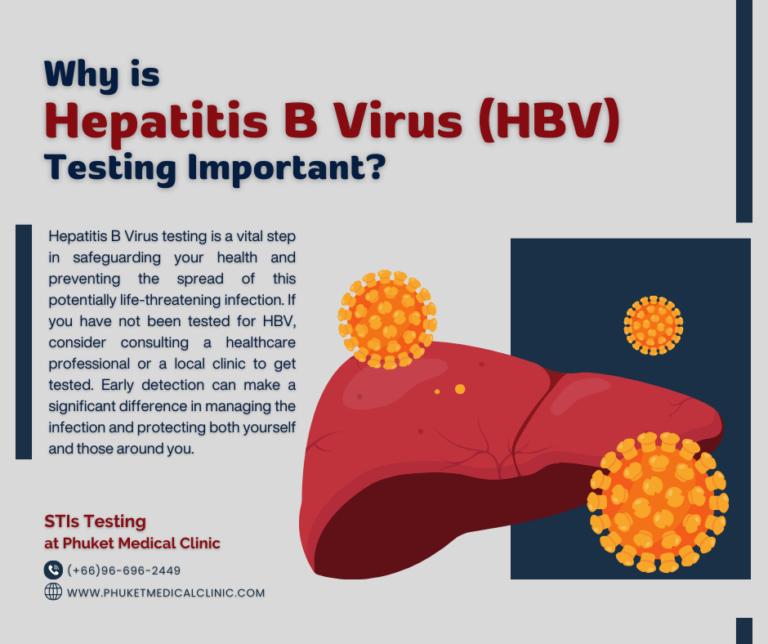
  • Why is Hepatitis B Virus (HBV) Testing Important?

    Hepatitis B Virus (HBV) is a global health concern that affects millions of people worldwide. It is a viral infection that primarily targets the liver, potentially leading to severe liver diseases such as cirrhosis and liver cancer if left untreated. Early detection of HBV is crucial for effective management and prevention of complications. In this article, we will explore the significance of HBV testing, the different testing methods available, and why you should consider getting tested.

    Why is HBV Testing Important?

  • Descovy : Uses, Benefits, and Key Information for HIV Prevention

    Descovy is a prescription medication that belongs to a class of drugs called nucleoside reverse transcriptase inhibitors (NRTIs). It is primarily used for two main purposes:

    HIV Prevention: Descovy is approved by the U.S. Food and Drug Administration (FDA) as a pre-exposure prophylaxis (PrEP) medication for individuals at high risk of contracting HIV. PrEP involves taking Descovy daily to reduce the risk of HIV infection.

    HIV Treatment: Descovy is also used in combination with other antiretroviral medications as part of a comprehensive HIV treatment regimen. It helps lower the viral load in individuals living with HIV, ultimately slowing the progression of the disease.

  • Understanding Oral Sex : Exploring Pleasure and Risks

    Oral sex is a common and intimate aspect of many adult relationships, contributing to the overall satisfaction and closeness between partners. However, like any sexual activity, it’s essential to be informed about both the pleasures and potential risks involved. In this article, we’ll delve into the world of oral sex, discussing what it entails and examining the associated risks to help you make informed decisions about your sexual health.

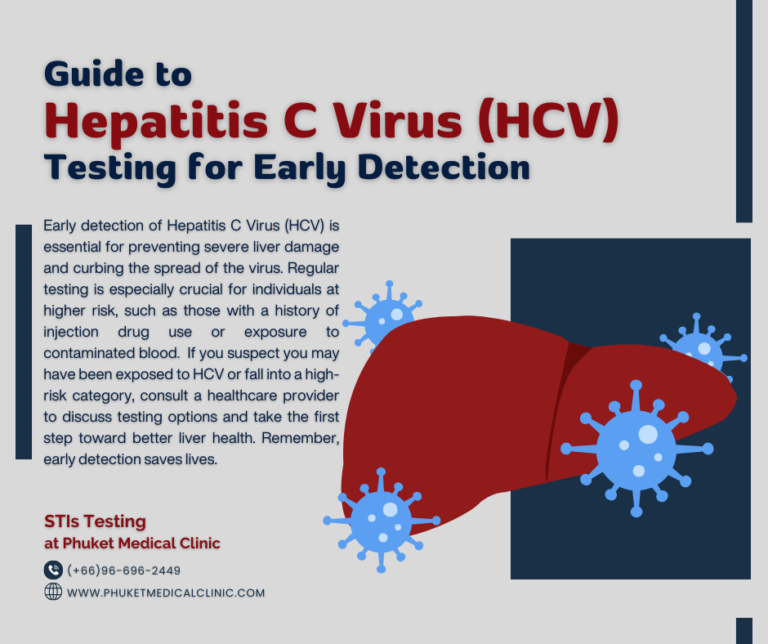
  • Guide to Hepatitis C Virus (HCV) Testing for Early Detection

    Hepatitis C Virus (HCV) is a silent epidemic that affects millions of people worldwide. According to the World Health Organization (WHO), around 71 million people are living with chronic HCV infection, leading to severe liver damage if left untreated. Early detection and diagnosis are critical in managing HCV effectively. This article will provide a comprehensive guide to HCV testing, including its importance, types of tests available, and the testing process.

  • Complications of Hepatitis B

    Hepatitis B is a viral infection that primarily affects the liver. It is caused by the hepatitis B virus (HBV) and is transmitted through contact with infected blood or bodily fluids. The virus can be contracted through unprotected sex, sharing contaminated needles, or from an infected mother to her baby during childbirth. Hepatitis B can lead to acute or chronic liver disease, with symptoms ranging from mild to severe. Acute hepatitis B infection may cause flu-like symptoms, jaundice, and fatigue, while chronic infection can result in long-term liver damage, cirrhosis, and an increased risk of liver cancer. Vaccination is available to prevent hepatitis B, and antiviral medications can help manage chronic infections. Regular testing and early intervention are crucial for effective management of the disease.